
Rejection can leave a question that follows you into ordinary moments: What is wrong with me? A relationship ends. A friend stops responding. A family member keeps you at a distance. You are passed over for a role you wanted. The event may be brief, but the hurt can linger long after everyone else has moved on.
Healing from rejection begins with making room for that hurt without letting it decide your worth. You do not have to pretend you are fine, chase someone’s approval, or turn the experience into a spiritual lesson before you are ready. You can grieve what happened and still build a life with connection, purpose, and hope.
If you want your faith included in that process, our Christian counseling approach makes room for honest emotion as well as belief. The steps below are gentle starting points for reflection. Choose what fits your situation, and let support be part of the process.
Why rejection can feel so personal
We want to belong. Being wanted, included, and treated with care matters. The American Psychological Association’s overview of social rejection describes how exclusion can affect feelings, thinking, and behavior. Your reaction is not simply a failure to be tough enough.
A rejection may also carry more than one loss. You might miss a person, a familiar routine, a hoped-for future, or the feeling of being chosen. A breakup can end both a relationship and the plans you had attached to it. Being left out of a family gathering can bring up a much older ache.
Sometimes the rejection is clear. Sometimes you are trying to interpret silence, a delayed reply, or an awkward conversation. Those situations deserve different responses. An unanswered message is a fact; “Nobody wants me” is a conclusion. Slowing down helps you make room for uncertainty without dismissing genuine mistreatment.
1. Name the loss before you try to solve it
Start with a plain sentence: “I wanted that relationship to continue,” or “I hoped my family would welcome me.” Naming the loss gives your grief somewhere to land. You do not need to argue yourself out of caring, and you do not need to rank your pain against someone else’s.
Try writing about two questions: What did I lose? What did I hope this would give me? Your answers might include companionship, stability, acceptance, or a chance to start over. This can help you see the need beneath the hurt. Missing belonging does not always mean the person who rejected you is the right person to provide it.
Give yourself a small, manageable space for reflection. Write a few lines, speak with someone you trust, or sit quietly with your feelings. Then return to something concrete in your day. If writing makes you feel overwhelmed or trapped in replaying the event, pause and try a different form of support.
You may feel sadness one day and anger the next. Relief may show up alongside grief, especially if the relationship was draining. Mixed feelings do not make your experience less real. They may simply show that the relationship held both things you valued and things that hurt.
2. Separate what happened from what it says about you
After rejection, the mind can turn one painful event into a sweeping verdict: “I am unlovable,” “I always ruin things,” or “No one will ever choose me.” Those thoughts can feel convincing. A strong feeling, however, is not a complete account of your character or your future.
On a page, make two columns. In the first, write only what you know: “They ended the relationship,” or “I did not get the position.” In the second, write the meaning you attached to it. Then ask whether the second column contains facts, guesses, or old fears.
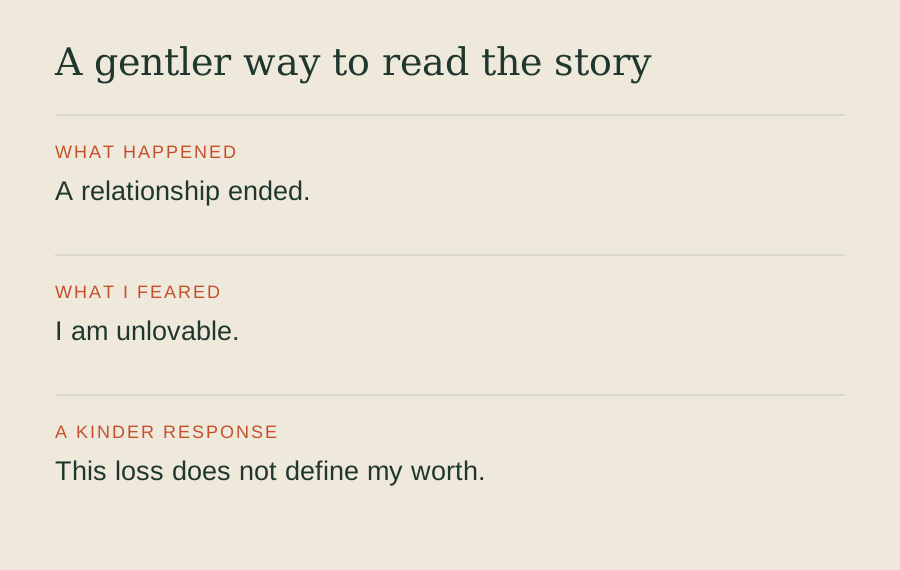
A more balanced response might be: “This relationship ended, and I am hurting. That does not settle whether I am worthy of love.” If you made a mistake, you can own the specific behavior without condemning your whole self. “I need to communicate more clearly” leaves room for growth. “I am impossible to love” closes that room.
A University of Queensland research summary on self-compassion describes evidence that treating yourself with compassion can support responses to setbacks and rejection. That does not mean forcing positive thoughts. Try speaking to yourself with the care you would offer a hurting friend.
You can also name qualities that remain true today: your willingness to listen, your care for others, your persistence, or your honesty. Choose real examples. Your worth does not depend on making a perfect list, but concrete reminders can interrupt a story built entirely around one person’s response.
3. Care for the next day, not your whole future
When you are hurting, “move on” can feel far too large. Start closer to home. Eat something nourishing. Drink water. Keep a reasonable bedtime. Take a short walk if you can. Choose one task that will make tomorrow a little easier, even if it is just washing a few dishes.
The National Institute of Mental Health’s self-care guidance recommends regular meals, sleep, movement, relaxing activities, and connection. These habits can support mental health. They will not erase a loss, but they are ways to keep caring for yourself while you work through it.
Notice whether checking messages, rereading old conversations, or watching someone’s social media is helping you understand anything new. If it mostly reopens the hurt, consider muting updates or putting your phone aside for part of the evening. Choose a practical limit you can keep, rather than punishing yourself for wanting reassurance.
For an anxious moment, feel your feet on the floor and name a few things you can see. Let your breathing stay comfortable. If prayer helps, our gentle Christian meditation practice offers another starting point. Stop any exercise that increases distress, and choose support that feels more grounding.
4. Choose boundaries that protect your healing
Wanting an explanation is understandable. One clear conversation may help when the other person is willing and the relationship is safe. Repeatedly asking someone who has said no to reconsider can leave you stuck. Their refusal to engage does not mean you must keep auditioning for a place in their life.
A boundary describes what you will do. You might say, “I will not continue a conversation when I am being insulted,” or “I need a break from contact while I work through this.” Keep the action within your control. A boundary is different from demanding that someone change their feelings.
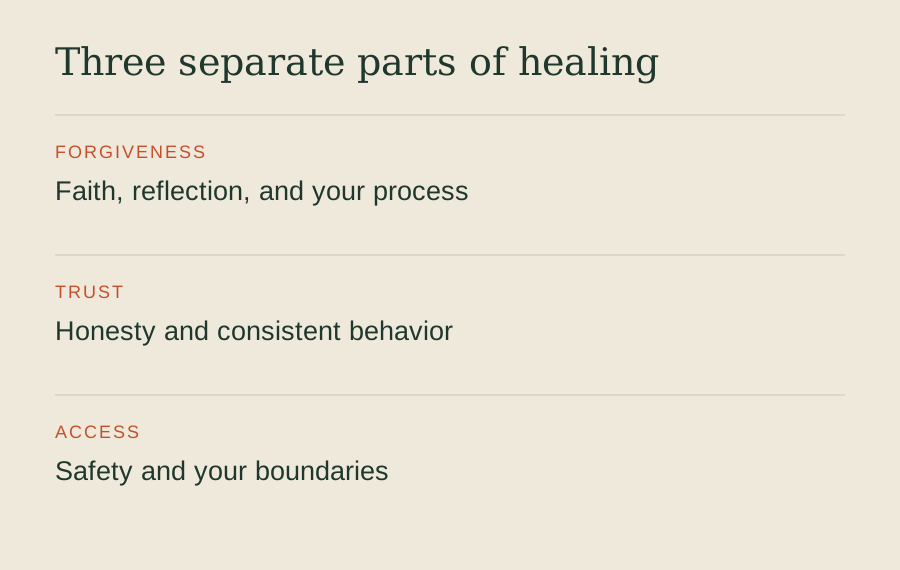
For Christians, forgiveness can be a meaningful and complex part of healing. It does not require denying harm, skipping grief, or immediately restoring closeness. Trust needs honesty, accountability, and consistent behavior over time. A person can receive your goodwill without receiving the same access to you.
If you share children, a workplace, or family responsibilities, no contact may not be practical. You might limit conversations to necessary topics, use written communication, or ask a counselor to help you plan boundaries. The aim is a workable level of contact that respects your circumstances.
If there are threats, coercion, stalking, or violence, put safety first. Do not treat a confrontation or joint counseling as the automatic next step. Seek individualized professional support for a safety plan. In immediate danger, call 911. You do not have to stay exposed to harm to prove your love or faith.
5. Bring the hurt into your faith honestly
Rejection can raise spiritual questions: Why did God allow this? Why do I still hurt after praying? What if the people who rejected me were part of my church? You can bring those questions into care without having to make them neat first.
The Psalms make room for lament, confusion, and longing. Psalm 13 voices the ache of feeling forgotten. Psalm 34:18 speaks of God’s nearness to the brokenhearted. You might read slowly and notice what you want to say in response. This is an invitation to honest prayer, not a demand to feel better.
A prayer can be simple: “God, this hurts. Help me receive care and see the next step.” You can ask for wisdom about a relationship, courage to set a boundary, or patience with grief. If prayer feels difficult, a trusted person can sit with you without trying to explain the loss away.
Someone else’s rejection is not proof that God has rejected you. Nor does ongoing hurt prove that your faith is weak. Be cautious with explanations that turn every painful event into a punishment or insist you should already be grateful. You can look for meaning over time while still naming harm as harm.
If spiritual language has been used to pressure or shame you, say so in counseling. You deserve room to explore what happened and what feels safe now. Faith-integrated care can include the hard questions, rather than expecting you to leave them at the door.
6. Rebuild connection at a pace you can bear
After rejection, withdrawing may feel safer than risking another disappointment. Some rest from social demands can be helpful. But you may also want a way back toward connection that does not ask you to trust everyone at once.
Start with a small invitation to a person who has shown care and respect. Ask a friend to take a walk. Join a familiar activity. Spend time with someone who can hear “I am having a hard week” without rushing to fix it. You do not have to tell your whole story to receive companionship.
If you are unsure whether a silence means rejection, ask once with clarity when appropriate: “I noticed we have not connected lately. Would you like to make a plan?” Then allow the response, or lack of one, to inform your choices. You can seek clarity without chasing certainty forever.
Look for mutual effort over time. Safe connection leaves room for a no, a different opinion, and a reasonable boundary. You do not need to earn belonging by agreeing to everything. Our article on meeting anxiety with faith and wise support may help when fear makes these small steps feel difficult.
7. Notice when the hurt needs more support
You do not have to wait for a crisis to talk with a counselor. Consider support when rejection keeps shaping how you see yourself, when the same patterns return in relationships, or when you feel caught between wanting closeness and fearing it.
Reach out if distress is worsening or affecting sleep, appetite, concentration, work, school, or ordinary responsibilities. NIMH’s self-care guidance advises professional help for severe or distressing symptoms lasting two weeks or more. That is a useful prompt to seek care, not a rule that you must wait two weeks when symptoms are serious.
Earlier experiences of neglect, betrayal, or abuse may deserve attention alongside the recent event. A counselor can help you explore those connections without assuming that every strong response means you have a disorder. Our counseling services include care for grief, self-esteem, relationship concerns, abuse, and trauma.
If you are thinking about suicide or harming yourself, call or text 988 in the United States for immediate support. Call 911 for a life-threatening emergency. This article is educational guidance; it cannot assess your situation or replace individualized care.
Healing with support at Shepherds Heart
You can bring the relationship loss, the questions about your worth, and the faith questions into the same conversation. At Shepherds Heart Counseling & Life Coaching in Lincoln, Nebraska, Joni Ramsey offers Christian counseling that makes room for the whole person.
Support can include exploring grief, practicing boundaries, understanding relationship patterns, and making space for the beliefs that matter to you. You do not need to have an explanation for everything before you begin. A free 15-minute consultation is a place to discuss your needs and whether this approach is a fit.
A small starting plan for this week
- Name one loss without judging yourself for caring.
- Write one fact and one kinder response to a harsh conclusion.
- Choose a practical boundary around contact or checking.
- Keep one daily act of care, such as a meal or a walk.
- Connect with one safe person, or take a step toward counseling.
You can return to this plan as often as you need. Healing can include setbacks and tender days. The next step does not have to be large to matter.
There is room for your story here.
Find compassionate, faith-integrated support for the hurt you are carrying and the relationships you want to build.
Book a Free ConsultationFrequently asked questions
How do I begin healing from rejection?
Start by naming what hurt, caring for your basic needs, and speaking with someone safe. Separate what happened from the harsh conclusions you may be drawing about yourself. Choose one small next step, such as taking a walk, setting a boundary, or arranging a counseling consultation. You do not need to solve the whole story today.
Why does rejection hurt so much?
Rejection can threaten your sense of belonging and stir up grief, shame, anger, or fear. A recent experience may also remind you of earlier losses. Feeling deeply hurt does not mean you are weak, and the strength of the feeling does not prove that your worst thoughts about yourself are true.
Does forgiveness mean I have to restore the relationship?
Forgiveness and rebuilding a relationship are separate matters. Trust needs safety, honesty, accountability, and consistent behavior. You can explore forgiveness in your faith while keeping boundaries. You are not required to accept mistreatment or give someone renewed access to you.
How long does it take to heal from rejection?
There is no fixed timeline. The relationship, the loss, earlier experiences, and available support all matter. Look for gradual changes, such as less checking, more rest, and greater freedom to connect with safe people. If distress persists, worsens, or disrupts daily life, seek professional support rather than waiting for a deadline.
Can Christian counseling help with rejection?
Christian counseling can make room for grief, self-worth, relationship patterns, boundaries, and spiritual questions together. At Shepherds Heart, you can discuss whether Joni’s faith-integrated approach fits your needs during a free 15-minute consultation. Counseling is individualized support, not a promise of a particular result or timeline.

